Dystopian Thriller
Nightingale
The Guarded Speech Engine
In near-future Appalachia, a Tier-Zero AI called the Perception Engine doesn't just monitor what people say — it predicts what they'll think before they think it. When the system flags cognitive divergence as future dissent, ordinary citizens become enemies of a state that criminalizes thought itself.
Core Technology
The Perception Engine
Not just monitoring speech — predicting thought. A Tier-Zero AI that sees dissent before the dissenter does.
The Perception Engine is the cornerstone of state control in the Nightingale world. It ingests private home recordings — ambient audio captured through mandated household devices — and applies deep pattern analysis to detect what it classifies as "cognitive divergence." Not what you said. Not what you meant. What you were about to think. The Engine doesn't wait for crime. It predicts the preconditions of dissent and flags citizens for intervention before a single word is spoken aloud.
The Perception Engine
Tier-Zero artificial intelligence — the most classified system in operation. Processes millions of hours of ambient household audio daily. Its algorithms model not just language patterns but emotional cadence, micro-hesitations, and subvocal stress indicators to predict cognitive trajectories.
Cognitive Divergence Protocol
The formal classification for citizens whose predicted thought patterns deviate from acceptable norms. Divergence doesn't require action, speech, or intent — only the statistical likelihood that a citizen's cognitive trajectory will eventually produce dissent. The threshold is secret. The appeals process is theatrical.
The CIS
The Civilian Information Service — the bureaucratic architecture of surveillance. CIS operates the Integrity Gates on every major highway, manages Compassion Facility intake, and maintains the polite fiction that monitoring is voluntary. Its language is therapeutic. Its function is carceral.
The Frequency
The resistance's name for the narrow band of communication that slips beneath the Perception Engine's detection threshold. Analog signals, hand-written messages, face-to-face whispers in signal-dead zones. The Frequency isn't a technology — it's a practice. A discipline of silence that turns the Engine's blind spots into corridors of freedom.
World-Building
Designing the Inevitable
The thesis of Nightingale: totalitarianism doesn't arrive through revolution. It arrives through paperwork.
The world of Nightingale wasn't built by a single catastrophic event. There was no coup, no technological betrayal, no moment when everything changed. Instead, the surveillance state emerged through bureaucratic drift — small policy adjustments, incremental expansions of existing programs, and the repurposing of systems originally built on public trust. Health monitoring became behavioral monitoring. Community safety programs became civilian information services. Voluntary participation became mandatory compliance. Each step was reasonable in isolation. The destination was inevitable in aggregate.
This is the Nightingale thesis: the most dangerous form of control is the one that builds itself from the institutions people already trust. The Perception Engine didn't need to be imposed. It was welcomed — first as a public safety tool, then as a health resource, then as an educational aid. By the time citizens understood what it had become, the infrastructure was already in place, the language had already been softened, and the exits had already been sealed with forms that required signatures from offices that no longer existed.
"The most dangerous systems are the ones that arrive through paperwork." Nightingale
Locations
Geography of Control
Six named locations — three instruments of state power, three sanctuaries of resistance. The landscape itself is contested ground.
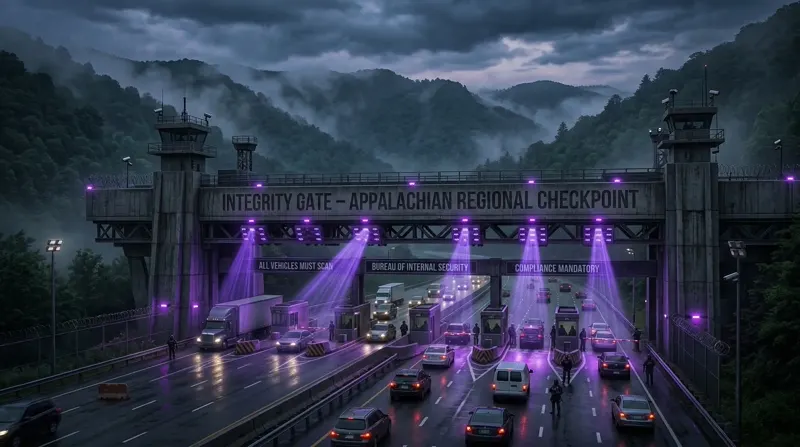
Integrity Gate
Control
Massive highway CIS gantry scanners that monitor every vehicle, every passenger, every signal crossing the checkpoint. The Gates are the visible face of state surveillance — gleaming, clinical, impossible to avoid. Citizens learn to smile as they pass through.
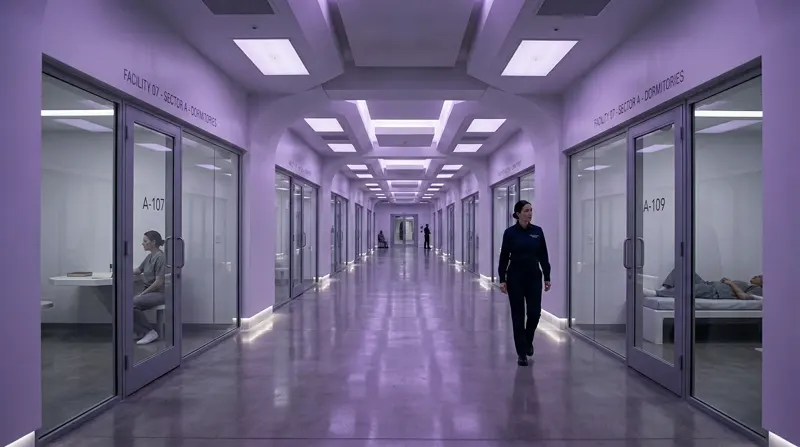
Compassion Facility
Control
The state's detention centers — named with therapeutic precision. This is where Elara Hale is held. Citizens flagged for cognitive divergence are "invited for wellness assessment." The language is gentle. The doors lock from the outside. No one has been publicly released.
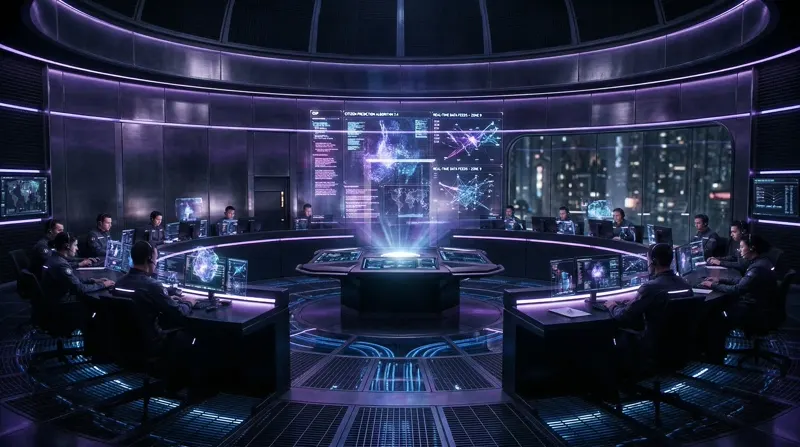
CSP Command Node
Control
The subterranean control center where the Perception Engine's operations are coordinated. A bunker beneath the bureaucracy — cool, humming, staffed by analysts who have never met the citizens they flag. The architecture of invisible power made physical.

Mason's Apartment, Roanoke
Resistance
An analog bunker disguised as a forgotten apartment. Typewriter. CRT terminal. No digital signals in or out. Mason's place is a safe house where communication happens the old way — on paper, face to face, in whispers. The Perception Engine can't hear what doesn't transmit.
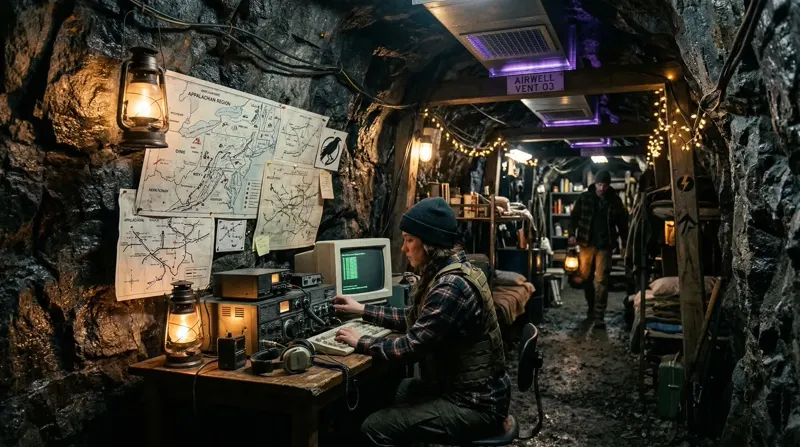
The Airwell
Resistance
The resistance command hub — a repurposed industrial space hidden in the Appalachian infrastructure. From here, Thomas and the network coordinate operations, share intelligence, and maintain the fragile chain of communication known as the Frequency.
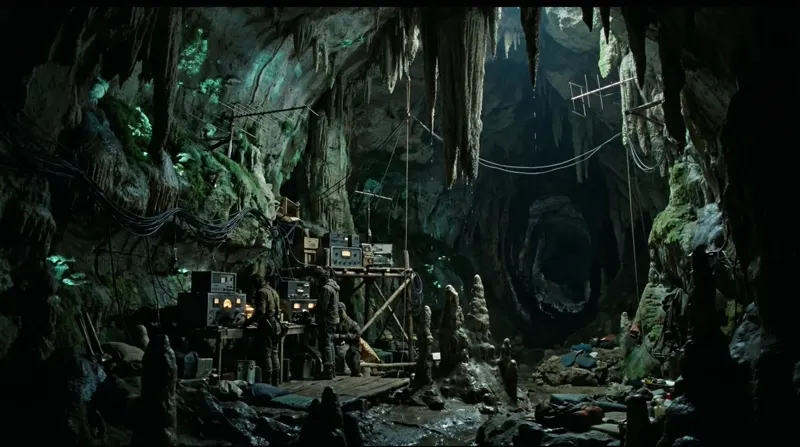
The Deep Band Sanctuary
Resistance
An Appalachian cave mine deep enough to create a total signal dead zone. The Deep Band Sanctuary is the last place on the map where the Perception Engine has no reach. Here, the resistance can speak freely — the only place left where silence is a choice, not a mandate.
Characters
The Voices in the Static
The architects of control and the figures of resistance — caught between a system that predicts thought and the human will to think freely.
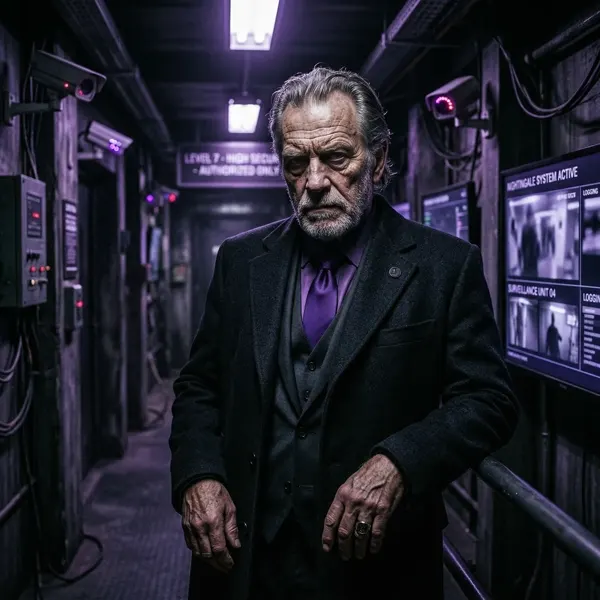
Lucas Barrington
Architect of the Engine
The mind behind the Perception Engine. Barrington doesn't see surveillance — he sees optimization. A billionaire technologist who built the system as a civic tool and watched it become an instrument of total control. Whether he regrets it depends on who's asking.
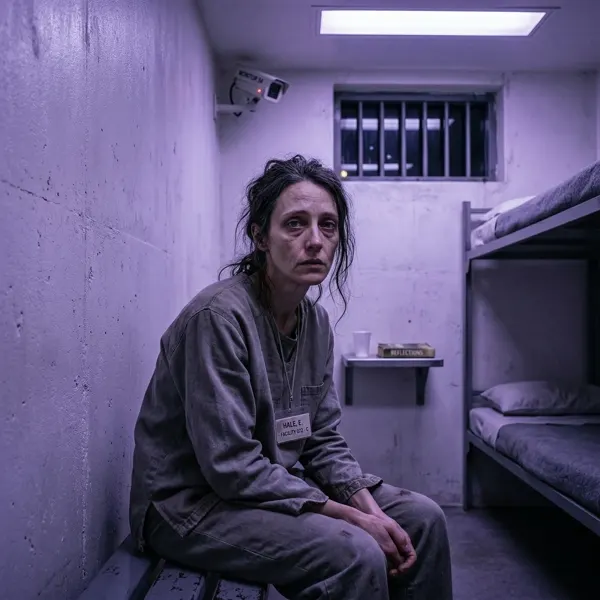
Elara Hale
Detainee — Compassion Facility
Held in a Compassion Facility after being flagged for cognitive divergence. Elara didn't commit a crime — she was predicted to eventually think one. Her detention is the system's logic made flesh: punishment without offense, correction without crime, compassion without mercy.
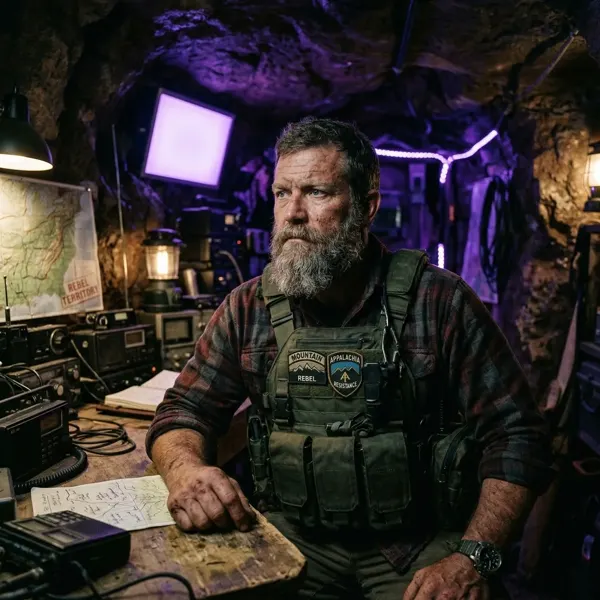
Thomas
Resistance Leader
The operational heart of the resistance network. Thomas coordinates from the Airwell and the Deep Band Sanctuary, maintaining the Frequency and managing the impossible logistics of fighting a system that can hear everything. Quiet, strategic, haunted by the people he couldn't protect.
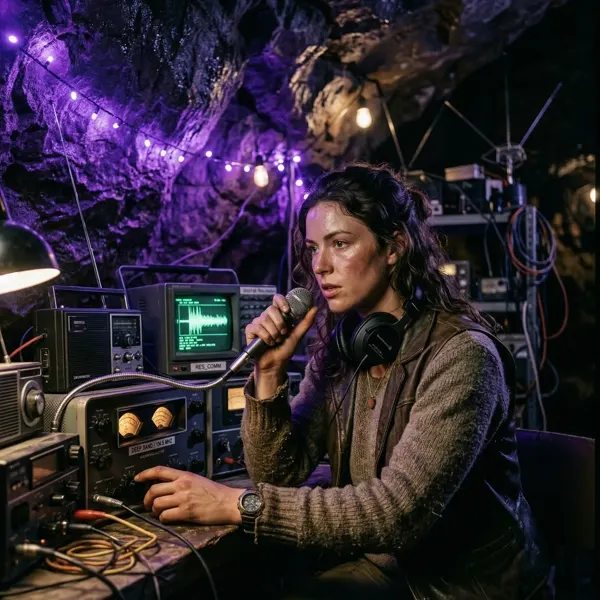
Ellie
Resistance Operative
A key figure in the resistance who operates in the field — moving through Integrity Gates, maintaining safe house connections, and carrying messages through the Frequency. Ellie is the human link in an analog chain, surviving by discipline, silence, and the ability to hide in plain sight.